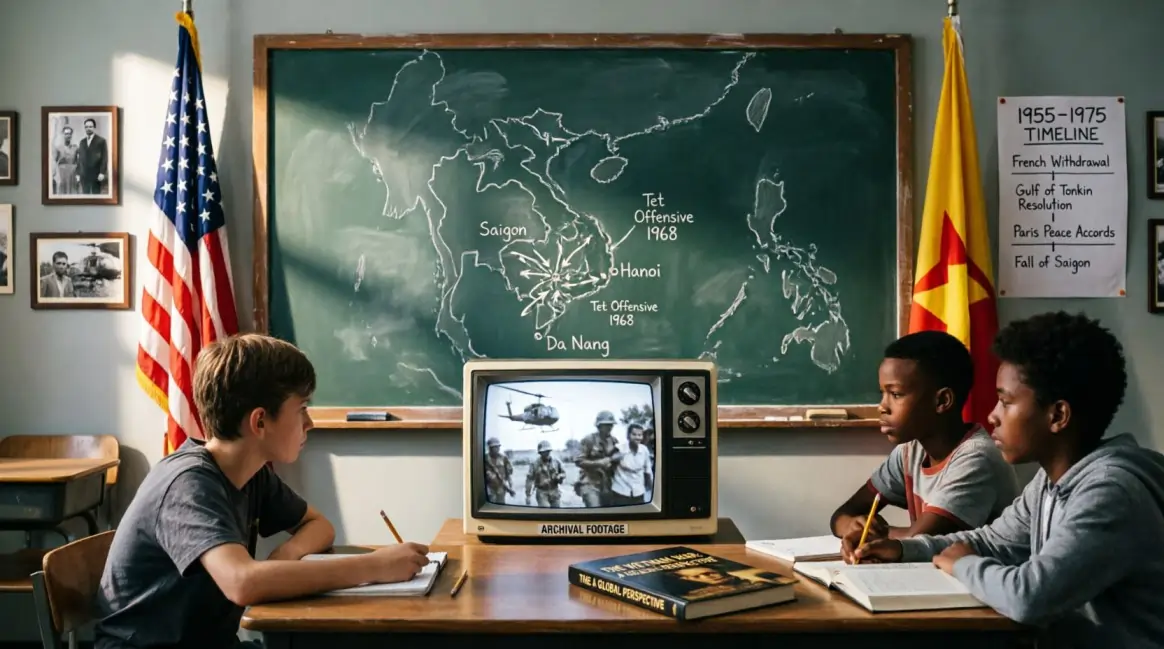
Many people search for “who won the Vietnam War u.s. or vietnam” because the answer can seem confusing.
The United States had one of the world’s strongest militaries. Yet Vietnam became united under North Vietnamese control after the war ended. So, people often wonder: Did the U.S. lose? Did Vietnam win? Or was it more complicated?
This question is common in schools, online debates, documentaries, and history discussions. Some people look for a quick answer, while others want to understand the political and military reasons behind the outcome. There is also confusion because different countries and historians describe the war in different ways.
The Vietnam War lasted for many years and caused huge losses on all sides. It changed U.S. politics, world relations, and Vietnam’s future. Understanding who won helps explain why the war still matters today.
In this guide, you will get a simple and direct answer, learn the history behind the war, compare viewpoints, avoid common mistakes, and see how the topic is discussed in everyday writing and online searches.
Who Won the Vietnam War U.S. or Vietnam? Quick Answer
Vietnam won the Vietnam War.
More specifically, North Vietnam and the Viet Cong defeated South Vietnam, and the United States failed to stop the communist takeover of the South.
The war officially ended in 1975 when Saigon fell to North Vietnamese forces. After that, Vietnam became one united communist country.
Simple Example
- U.S. goal: Keep South Vietnam independent and non communist.
- North Vietnam’s goal: Unite Vietnam under communist rule.
- Final result: Vietnam was united under North Vietnam’s control.
Because North Vietnam achieved its goal, most historians say Vietnam won the war.
The Origin of the Vietnam War Question
The question “Who won the Vietnam War?” became popular because the war had no simple peace agreement like many earlier wars.
The Vietnam War began after Vietnam was divided into:
- North Vietnam → Communist government
- South Vietnam → Anti communist government supported by the United States
The United States joined because of the Cold War. American leaders feared communism would spread across Asia. This idea was called the Domino Theory.
Why Confusion Exists
People become confused for several reasons:
| Reason | Explanation |
|---|---|
| Strong U.S. military | Many assume the stronger army must win |
| No invasion of the U.S. | Some think the U.S. could not “lose” |
| Political vs military goals | War was about control and influence |
| Different historical views | Countries teach the war differently |
British English vs American English Spelling
The keyword itself does not have major spelling differences in British and American English. However, related Vietnam War terms often differ in style, punctuation, or wording.
Common Differences:
| American English | British English |
|---|---|
| Defense | Defence |
| Realize | Realise |
| Organization | Organisation |
| Center | Centre |
| Traveling | Travelling |
Example Sentences
- American English: The U.S. Defense Department studied the Vietnam War.
- British English: The U.S. Defence Department studied the Vietnam War.
Why These Differences Exist
American English spelling became simpler over time, especially after dictionary writer Noah Webster promoted shorter spellings. British English kept many older forms.
Which Spelling Should You Use?
The best spelling depends on your audience.
Use American English If:
- Your readers are in the United States
- You write for U.S. schools or media
- Your website targets American traffic
Use British English If:
- Your audience is in the UK
- You write for Commonwealth countries
- Your publication follows British style guides
Use One Style Consistently
Do not mix styles in the same article.
Audience Based Writing Advice
| Audience | Best Style |
|---|---|
| United States | American English |
| United Kingdom | British English |
| Australia / New Zealand | British English |
| Global audience | Choose one style and stay consistent |
Common Mistakes with “Who Won the Vietnam War U.S. or Vietnam”
Many people make mistakes when discussing the Vietnam War.
Mistake 1: Saying the U.S. Won
Incorrect:
- “America won the Vietnam War.”
Correct:
- “North Vietnam won after South Vietnam collapsed in 1975.”
Mistake 2: Ignoring South Vietnam
Incorrect:
- “The U.S. fought Vietnam.”
Correct:
- “The U.S. supported South Vietnam against North Vietnam.”
Mistake 3: Confusing Battles With the Whole War
The U.S. won many military battles but still failed to achieve its political goal.
Mistake 4: Thinking the War Ended in 1973
The U.S. withdrew troops in 1973, but the war continued until 1975.
Who Won the Vietnam War U.S. or Vietnam in Everyday Examples
People discuss this topic in many types of writing.
Email Example
“Our history class discussed who won the Vietnam War and why the U.S. withdrew.”
News Example
“Historians continue to debate the political effects of the Vietnam War.”
Social Media Example
“Did the U.S. lose Vietnam? The answer depends on military and political goals.”
Formal Writing Example
“North Vietnam achieved reunification in 1975 following the collapse of South Vietnam.”
Who Won the Vietnam War U.S. or Vietnam Google Trends & Usage Data
Searches for this keyword remain popular because students, researchers, and history fans want quick answers.
Countries With High Interest
| Country | Reason for Interest |
|---|---|
| United States | School history and military studies |
| Vietnam | National history |
| United Kingdom | Global history interest |
| Canada | Academic research |
| Australia | Military involvement history |
Common Search Variations
| Keyword Variation | Search Intent |
|---|---|
| Who won the Vietnam War | quick answer |
| Did the U.S. lose Vietnam | political discussion |
| Who defeated America in Vietnam | military focus |
| Vietnam War winner | simple explanation |
| Why did America lose the Vietnam War | detailed historical analysis |
Comparison Table: Keyword Variations
| Keyword | Meaning | Best Use |
|---|---|---|
| Who won the Vietnam War | general question | educational articles |
| Did the U.S. lose Vietnam | focus on America | debate topics |
| Who defeated the U.S. in Vietnam | military angle | history discussions |
| Vietnam War outcome | neutral wording | academic writing |
| Vietnam War result | summary style | research papers |
FAQs
1. Who officially won the Vietnam War?
North Vietnam officially won after capturing Saigon in 1975.
2. Did the United States lose the Vietnam War?
Most historians say yes because the U.S. failed to achieve its main political goal.
3. Why did the U.S. enter the Vietnam War?
The U.S. wanted to stop the spread of communism during the Cold War.
4. When did the Vietnam War end?
The war ended in 1975 when Saigon fell to North Vietnamese forces.
5. Did the U.S. win any battles?
Yes. The U.S. won many battles but still lost the overall political objective.
6. What happened after the war?
Vietnam became one united communist country under North Vietnamese leadership.
7. Why is the Vietnam War still important today?
The war changed U.S. foreign policy, military planning, and public opinion about war.
Conclusion
The answer to “who won the Vietnam War u.s. or vietnam” is clear in historical terms: North Vietnam won the war. The United States entered the conflict to stop communism and protect South Vietnam, but it could not achieve that goal. In 1975, Saigon fell, and Vietnam became one united communist nation.
Still, the topic remains complex because military success and political success are not always the same thing. The U.S. won many battles during the war, but wars are usually judged by final outcomes and long term goals.
That is why historians generally describe the war as a victory for North Vietnam and a defeat for South Vietnam and its U.S. allies.
When writing or discussing this topic, keep your language simple, factual, and balanced. Use consistent English spelling based on your audience, avoid common historical mistakes, and explain the difference between military victories and political results.
Doing so helps readers better understand one of the most important conflicts of the 20th century.

Hi, I’m Virginia Woolf, a language enthusiast passionate about exploring the power of words and their meanings. I specialize in helping readers choose the right words through clear comparisons, synonyms, and practical usage. My goal is to make vocabulary learning simple, engaging, and useful for everyday communication. picktheword.com