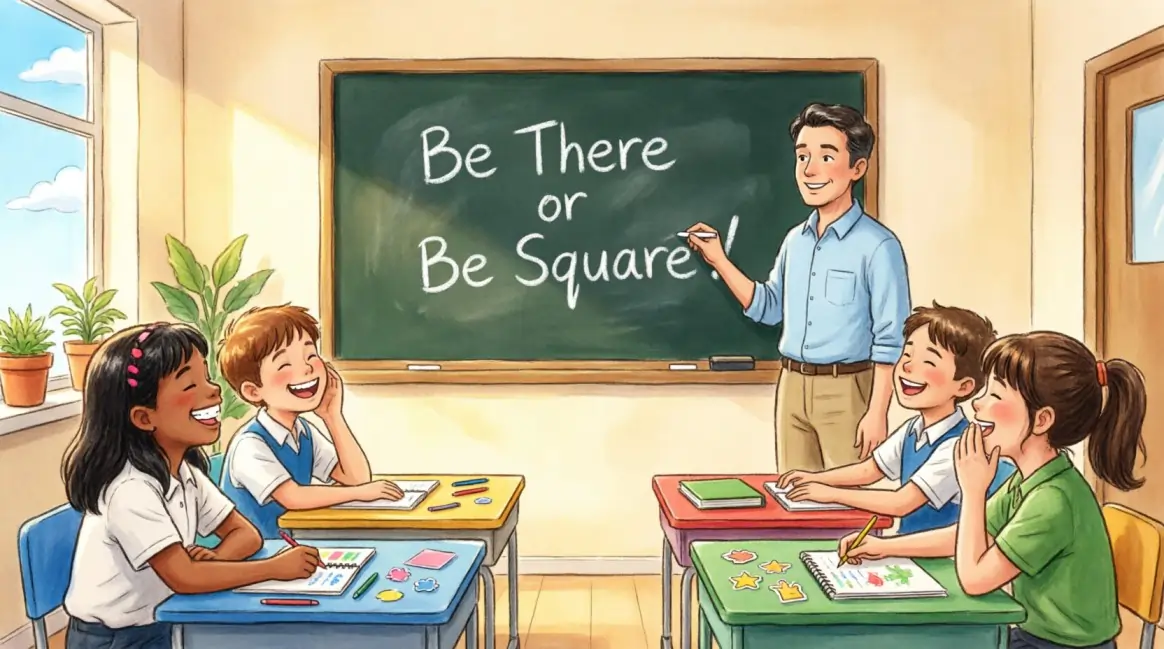
“Be there or be square” is a fun and popular English phrase. People use it to invite someone to an event in a playful way. The phrase means: if you do not come, you are not cool or interesting.
Many people search for “be there or be square” because they want to know its meaning, origin, and how to use it correctly. Some people also wonder if it has another spelling or if it is formal or informal English.
This article gives a simple and complete explanation of the phrase. You will learn where it came from, how it became popular, and how people use it in daily life. You will also see examples in emails, social media posts, and conversations.
If you want a quick answer, detailed explanation, and practical advice, this guide will help you understand everything about “be there or be square.”
Be There or Be Square Quick Answer
“Be there or be square” means:
Come to the event, or you may seem boring or uncool.
It is a casual and humorous phrase. People mostly use it with friends, classmates, or coworkers.
Examples
- “Party starts at 8 PM. Be there or be square!”
- “We’re meeting at the café tonight. Be there or be square.”
- “Game night on Friday — be there or be square!”
The phrase is friendly and informal. It is not usually used in serious business writing.
The Origin of Be There or Be Square
The phrase became popular in the United States during the 1950s and 1960s. Teenagers and young people used it often in social culture.
The word “square” was slang for a person who was boring, old-fashioned, or not socially active. So, if you were not “there,” you were called “square.”
Why the Phrase Became Popular
- Easy to remember
- Funny rhyme
- Playful social meaning
- Popular in youth culture
The phrase later appeared in movies, TV shows, music, and advertisements.
Does the Phrase Have Different Spellings?
No. The correct and common form is:
| Correct Phrase | Incorrect Variations |
| Be there or be square | Be their or be square |
| Be there or be square | Be there or bee square |
| Be there or be squared |
The phrase does not have British or American spelling differences.
British English vs American English Spelling
Unlike many English words, “be there or be square” stays the same in both British English and American English.
Still, people often search for spelling differences because many English phrases change between regions.
Common UK vs US Spelling Examples
| American English | British English |
| Color | Colour |
| Favorite | Favourite |
| Center | Centre |
| Organize | Organise |
| Traveling | Travelling |
Comparison Table for the Phrase
| Version | Region | Correct? |
| Be there or be square | US English | Yes |
| Be there or be square | UK English | Yes |
| Be there or be squared | Global | No |
So, no matter where you write English, the phrase remains the same.
Which Spelling Should You Use?
You should always use:
“Be there or be square”
For American Audiences
Use the phrase exactly as written. It is very common and natural in American casual speech.
For British or Commonwealth Audiences
The phrase is still understood and accepted. It may sound slightly more American, but people know its meaning.
For Global Audiences
The phrase works best in:
- Social media
- Informal invitations
- Casual marketing
- Friendly conversations
Avoid using it in:
- Legal documents
- Academic papers
- Serious business reports
Common Mistakes with Be There or Be Square
People sometimes make spelling or grammar mistakes with this phrase.
Frequent Errors
| Mistake | Correct Form |
| Be their or be square | Be there or be square |
| Bee there or be square | Be there or be square |
| Be there or bee square | Be there or be square |
| Be there or be squared | Be there or be square |
Another Common Mistake
Some people think the phrase is rude. Usually, it is playful and friendly, not offensive.
Be There or Be Square in Everyday Examples
Here are simple ways people use the phrase in daily life.
In Emails
“Our team lunch starts at noon. Be there or be square!”
On Social Media
“Concert tonight! Be there or be square 🎵”
In News or Marketing
“Grand opening this Saturday — be there or be square!”
In Text Messages
“Movie night at my place. Be there or be square.”
In School or College
“Basketball game after class. Be there or be square!”
The phrase sounds fun and energetic.
Be There or Be Square Google Trends & Usage Data
The phrase is most popular in:
- United States
- Canada
- Australia
- United Kingdom
People often search for it when:
- Writing invitations
- Understanding slang
- Creating social media captions
- Learning English phrases
Common Search Intent
| Search Query | User Intent |
| Be there or be square meaning | Learn definition |
| Be there or be square origin | Learn history |
| Be there or be square examples | Learn usage |
| Be there or be square slang | Understand tone |
The phrase remains popular because it is catchy and easy to remember.
Comparison Table of Keyword Variations
| Keyword Variation | Meaning | Correct Usage |
| Be there or be square | Main phrase | Correct |
| Be there or be squared | Incorrect version | Wrong |
| Be their or be square | Spelling mistake | Wrong |
| Be there or bee square | Typing mistake | Wrong |
FAQs About Be There or Be Square
What does “be there or be square” mean?
It means you should attend an event or you may seem boring or uncool.
Is “be there or be square” rude?
No. It is usually playful and friendly.
Is the phrase formal or informal?
It is informal English.
Where did the phrase come from?
It became popular in American youth culture during the 1950s and 1960s.
Is there a British spelling version?
No. The phrase is spelled the same in British and American English.
Can I use it in business emails?
Only in casual or friendly business settings.
Why is “square” used in the phrase?
“Square” was old slang for someone boring or not trendy.
Conclusion
“Be there or be square” is a classic English phrase that people still use today. It is simple, fun, and easy to understand. The phrase invites someone to join an event while joking that missing it would be uncool.
The expression started in American slang culture and became popular because of its catchy rhyme. Unlike many English words, it does not change between British and American English. The spelling always stays the same.
You can use this phrase in casual conversations, text messages, invitations, and social media posts. It works best in friendly and informal situations. However, avoid using it in serious professional writing.
If you want your message to sound fun, welcoming, and energetic, “be there or be square” is a great choice. Just remember to use the correct spelling and tone for your audience.