Have you ever paused while writing and wondered: should it be canceled or cancelled? You’re not alone. This is one of the most searched spelling questions in English.
People often get confused because both versions look correct and in fact, they are.
The confusion comes from differences between American and British English rules.
If you’re writing an email, a blog post, or a professional document, choosing the right spelling matters.
It helps your writing look polished and consistent. This guide clears up the confusion by explaining when and why each spelling is used.
By the end, you’ll know exactly which version to choose based on your audience.
You’ll also learn the origin of the word, common mistakes, and real life examples. Let’s make this simple and clear.
Canceled or Cancelled
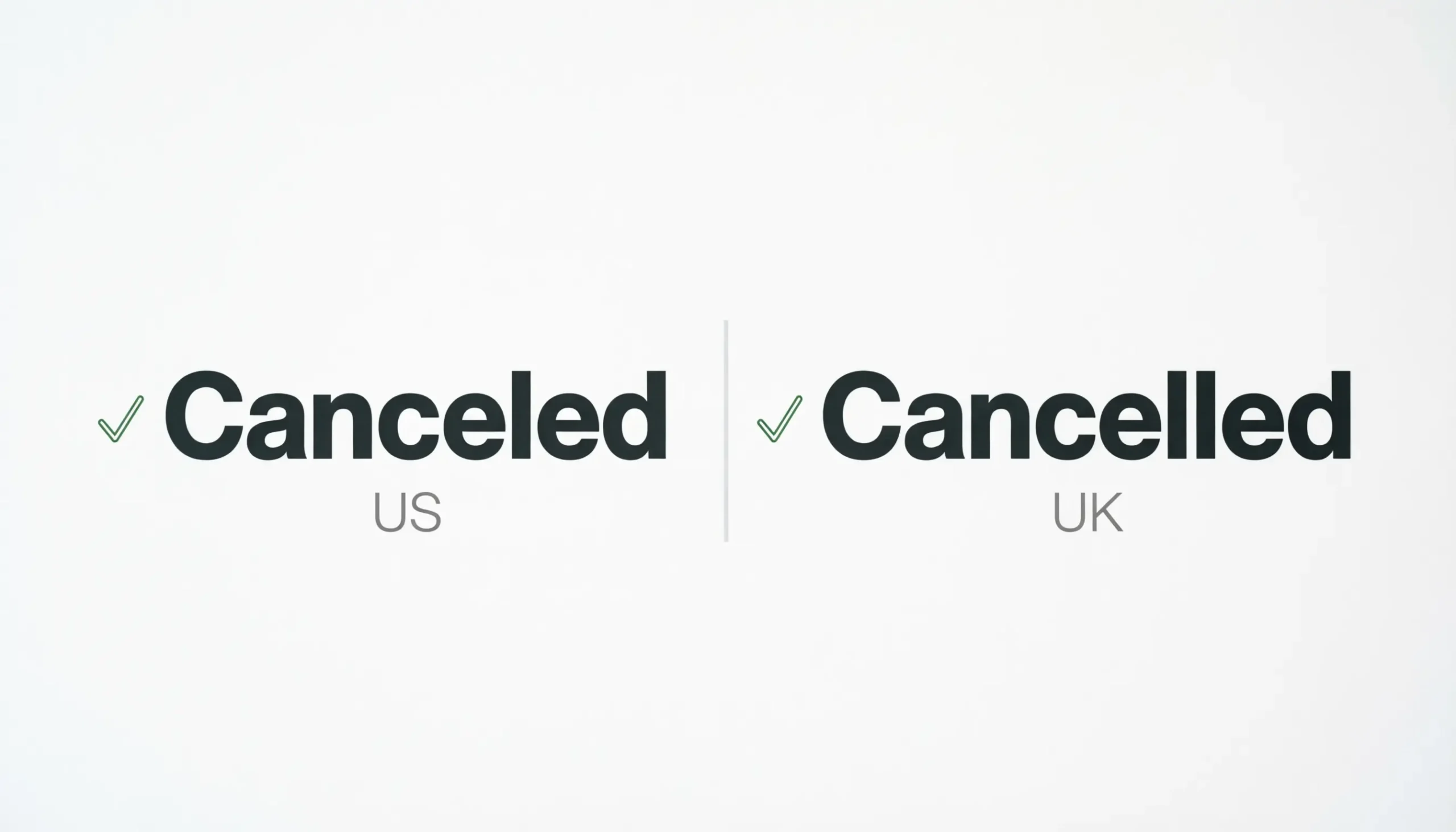
Both canceled and cancelled are correct.
- Canceled → Used in American English
- Cancelled → Used in British English
Examples:
- American English: The flight was canceled due to rain.
- British English: The match was cancelled because of weather.
The Origin of Canceled or Cancelled
The word cancel comes from the Latin word cancellare, meaning “to cross out.” It entered English through Old French.
In early English, spelling was not fixed. Over time, British English kept the double “l” form (cancelled), while American English simplified it to a single “l” (canceled). This change followed a pattern in American spelling to make words shorter and easier.
British English vs American English Spelling
| Version | Rule | Example |
|---|---|---|
| American English | Use one “l” | canceled, canceling |
| British English | Double the “l” | cancelled, cancelling |
✅ Quick Comparison Table
| Base Word | American English | British English |
|---|---|---|
| Cancel | canceled | cancelled |
| Cancel | canceling | cancelling |
Which Spelling Should You Use?
It depends on your audience:
- For U.S. readers → Use canceled
- For UK or Commonwealth countries (UK, Canada, Australia) → Use cancelled
- For global audiences → Pick one style and stay consistent
Tip: If you’re writing for the web, consistency matters more than which version you choose.
Common Mistakes with Canceled or Cancelled
Here are common errors and how to fix them:
- ❌ Mixing both forms in one article
✔️ Stick to one style - ❌ Using cancelled in American writing
✔️ Use canceled - ❌ Forgetting consistency in formal writing
✔️ Follow a style guide (APA, MLA, etc.) - ❌ Writing cancelleded or other typos
✔️ Double check spelling
Canceled or Cancelled in Everyday Examples
Emails:
- Your appointment has been canceled. (US)
- Your booking has been cancelled. (UK)
News:
- The event was canceled due to safety concerns.
- The concert was cancelled after heavy rain.
Social Media:
- Our plans got canceled 😢
- Trip cancelled… staying home!
Formal Writing:
- The contract was canceled by both parties.
- The agreement was cancelled after review.
Canceled or Cancelled – Google Trends & Usage Data
Search trends show:
- “Canceled” is more popular in the United States
- “Cancelled” is more common in the UK, Australia, and Canada
Globally, both are widely used. However, American content dominates online, so canceled appears slightly more often on the internet.
Keyword Comparison Table
| Keyword Variation | Region | Usage Frequency |
|---|---|---|
| canceled | USA | Very High |
| cancelled | UK/Commonwealth | High |
| canceling | USA | High |
| cancelling | UK/Commonwealth | High |
FAQs
1. Is “canceled” wrong?
No, it is correct in American English.
2. Is “cancelled” more formal?
No. Both are equally formal. It depends on region.
3. Which spelling is used in exams?
Follow the version required (British or American English).
4. Can I use both in one document?
No. Choose one and stay consistent.
5. Why does British English use double “l”?
It follows a rule of doubling the final consonant before adding endings.
6. What about Canada?
Canada mostly uses cancelled, like British English.
7. Which spelling is better for SEO?
Use the version your target audience searches for.
Conclusion
The difference between canceled and cancelled is simple once you understand it.
Both spellings are correct, but they belong to different forms of English.
American English prefers canceled with one “l,” while British English uses cancelled with two.
The key is knowing your audience. If you’re writing for a U.S. audience, use canceled.
For readers in the UK or Commonwealth countries, choose cancelled.
If your audience is global, consistency is the most important rule.
This small detail can improve your writing and make it more professional.
It also shows attention to language and clarity.
So next time you pause at this word, you’ll know exactly what to do no confusion, just confidence.