“Winter spring summer or fall” is a phrase many people recognize, but not everyone fully understands.
Some search it because they’ve heard it in a song, while others want to know its meaning, grammar, or proper usage.
The phrase sounds simple, yet it carries emotional weight and can be used in both casual and poetic contexts.
People often get confused about whether it’s just a list of seasons or if it has a deeper meaning.
Others wonder if there are spelling variations, punctuation rules, or cultural differences in how it’s used. This guide clears up all those questions.
In this article, you’ll get a quick answer, learn the origin of the phrase, see real life examples, and understand how to use it correctly in writing.
If you’re a student, writer, or just curious, this guide will help you use “winter spring summer or fall” with confidence.
Winter Spring Summer or Fall
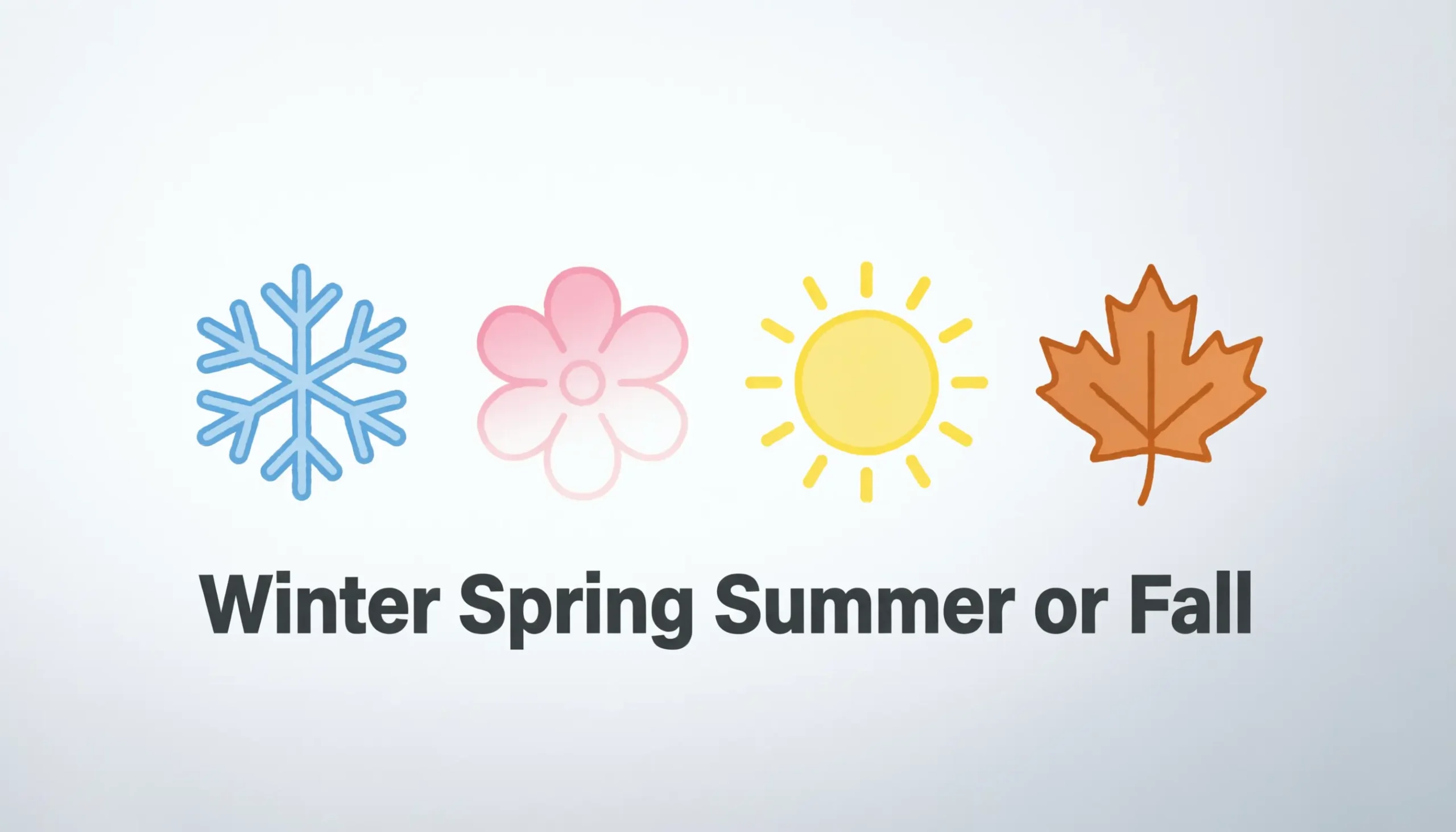
“Winter spring summer or fall” is a phrase that lists all four seasons. It often means “at any time of the year” or “always.”
Example:
- “I’ll be there for you, winter spring summer or fall.”
The Origin of Winter Spring Summer or Fall
The phrase became popular through the famous song “You’ve Got a Friend” written by Carole King in 1971. The line “winter, spring, summer, or fall” expresses constant support and loyalty.
The words themselves come from Old English roots:
- Winter from wintra (cold season)
- Spring from springan (to rise or grow)
- Summer from sumor (warm season)
- Fall shortened from “fall of the leaf”
There are no spelling variations for the phrase itself, but the meaning has evolved into something emotional and symbolic.
British English vs American English Spelling
📘 Fall vs Autumn
| Region | Common Term | Example |
|---|---|---|
| American English | Fall | Fall is my favorite season |
| British English | Autumn | Autumn is my favourite season |
Which Spelling Should You Use?
Your choice depends on your audience:
- US audience: Use “fall”
- UK/Commonwealth audience: Use “autumn”
- Global audience: Either is fine, but “autumn” sounds more formal
If you are writing content for SEO or international readers, choose one style and stay consistent.
Common Mistakes with Winter Spring Summer or Fall
Here are frequent errors and how to fix them:
- ❌ Missing commas:
“winter spring summer or fall”
✔ “winter, spring, summer, or fall” - ❌ Mixing styles:
“winter spring summer or autumn fall”
✔ Choose one: “fall” or “autumn” - ❌ Using wrong meaning:
Some think it only lists seasons
✔ It can also mean “always” or “anytime”
Winter Spring Summer or Fall in Everyday Examples
Emails:
“I’m available to help you, winter, spring, summer, or fall.”
News:
“The park attracts visitors winter, spring, summer, or fall.”
Social Media:
“Travel vibes, winter spring summer or fall 🌍”
Formal Writing:
“The service operates year round, winter, spring, summer, or fall.”
Winter Spring Summer or Fall Google Trends & Usage Data
The phrase is popular worldwide, especially in:
- United States (due to song influence)
- Canada and Australia
- UK (with “autumn” variation)
Usage Contexts:
- Music lyrics
- Motivational quotes
- Seasonal content
- Social media captions
Search interest rises during seasonal changes and holiday periods.
Keyword Variations Comparison Table
| Variation | Region | Usage |
|---|---|---|
| winter spring summer or fall | US | Most common phrase |
| winter spring summer or autumn | UK | Formal and regional |
| all seasons phrase | Global | General meaning |
| year round expression | Global | Professional usage |
FAQs
1. What does “winter spring summer or fall” mean?
It means “at any time” or “always.”
2. Is the phrase from a song?
Yes, it became famous from “You’ve Got a Friend.”
3. Can I replace “fall” with “autumn”?
Yes, especially in British English.
4. Do I need commas in the phrase?
Yes: “winter, spring, summer, or fall.”
5. Is it formal or informal?
It can be both, depending on context.
6. Why do people search this phrase?
Mostly for meaning, lyrics, or grammar.
7. Is it good for writing content?
Yes, especially for emotional or seasonal topics.
Conclusion
“Winter spring summer or fall” is more than just a list of seasons.
It’s a phrase that carries meaning, emotion, and cultural value.
While it started as a simple way to name the four seasons, it has grown into a powerful expression of consistency and loyalty.
Understanding its origin helps you see why it is still popular today.
Knowing the difference between “fall” and “autumn” ensures you use it correctly for your audience.
Avoiding common mistakes, like missing commas or mixing styles, will make your writing clearer and more professional.
This phrase works well in many situations, from casual messages to formal writing.
It is simple, flexible, and easy to understand. If you are writing for SEO, social media, or personal use, you can use it with confidence.
In short, “winter spring summer or fall” is a timeless phrase that fits every season and every message.