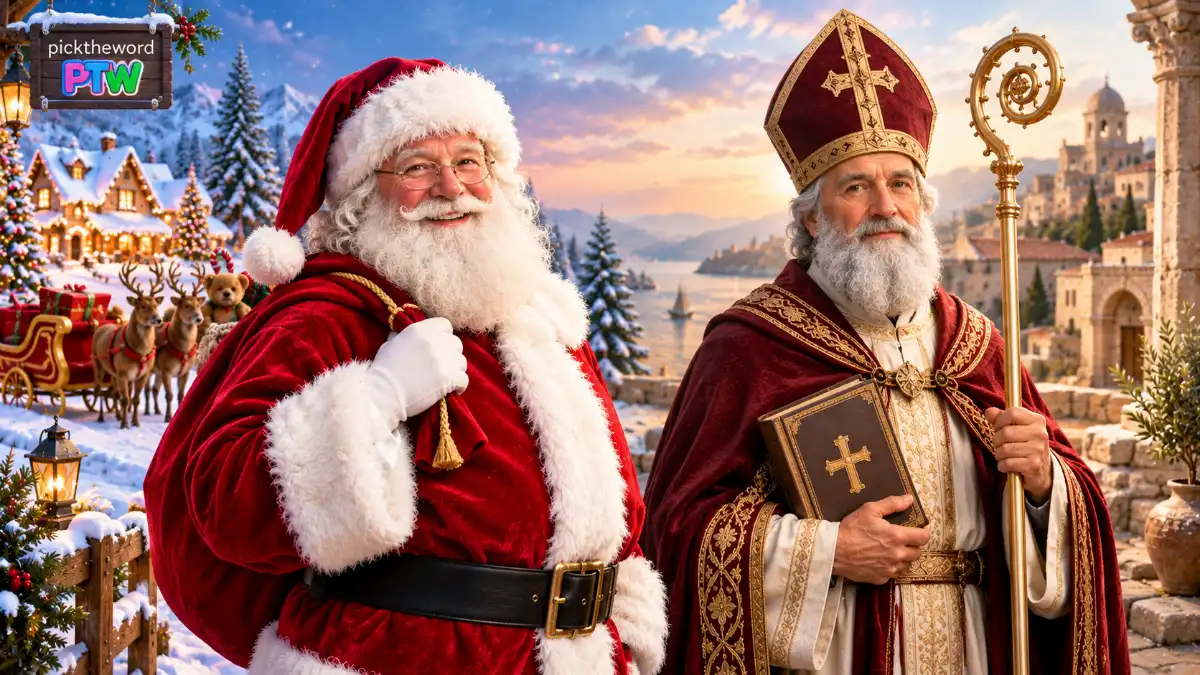
If you have ever wondered, “Is Santa real, yes or no?”
You are not alone. Many children and even adults ask this question, especially around Christmas. Stories about Santa Claus have been shared for hundreds of years, so it can be hard to know where the story ends and history begins.
The short answer is:
Santa Claus, as the magical man who lives at the North Pole and flies around the world in one night, is not a real person in the literal sense.
However, Santa is based partly on a real historical person, Saint Nicholas, and the Santa story is still very real as a Christmas tradition.
Quick Answer:
Is Santa Real, Yes or No?
No, Santa Claus is not real in the way he is described in Christmas stories. There is no reliable evidence that a magical Santa lives at the North Pole, has flying reindeer, or delivers presents to every child in one night.
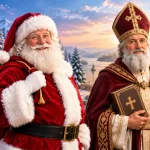
However, Saint Nicholas was a real person who lived many centuries ago. Stories about his kindness and generosity helped inspire the character we now call Santa Claus.
So, if someone asks, “Is Santa real?”
The simplest answer is:
The magical Santa from Christmas stories is not real, but the tradition of Santa comes from real history and has a special meaning for many families.
Who Is Santa Claus?
Santa Claus is a famous Christmas character known for giving gifts to children.
In modern stories, Santa is usually described as:
- An old man with a white beard
- Wearing a red suit
- Living at the North Pole
- Traveling in a flying sleigh
- Being pulled by flying reindeer
- Entering homes through chimneys
- Leaving presents for children on Christmas Eve
- Working with elves to make toys
These details are part of a Christmas tradition and story, not proven facts.
Different countries also have their own versions of Santa. His name and appearance may change, but the main idea is usually similar:
A generous person who brings happiness and gives gifts during the Christmas season.
Was Santa Claus Ever a Real Person?
Yes, Santa Claus has roots in a real historical person named Saint Nicholas.
Saint Nicholas was a Christian bishop who lived many centuries ago, probably during the 3rd and 4th centuries. He became famous in stories for being generous and helping people in need.
Over time, stories about Saint Nicholas spread across Europe. Different cultures added their own customs and characters. Eventually, these traditions helped create the modern idea of Santa Claus.
So there is an important difference:
| Santa in Christmas Stories | Saint Nicholas |
|---|---|
| Magical character | Historical religious figure |
| Lives at the North Pole | Lived many centuries ago |
| Has flying reindeer | No reliable evidence of flying reindeer |
| Delivers presents worldwide in one night | Known for generosity and helping others |
| Part of Christmas folklore | Based on a real historical tradition |
This is why you may hear both “Santa is not real” and “Santa was based on a real person.” Both statements can make sense when they are explained correctly.
Where Did the Santa Story Come From?
The modern Santa Claus story developed over a very long period.
Saint Nicholas traditions mixed with other European Christmas customs. In some places, people told stories about gift giving figures who visited children during the holiday season.
The character changed as these stories moved from one country to another.
The English name Santa Claus is connected to the Dutch name Sinterklaas, which came from Saint Nicholas.
Later, poems, stories, illustrations, advertisements, movies, and popular culture helped shape the Santa most people recognize today.
The familiar image of Santa as a cheerful man with a white beard and red clothing became especially popular during the 19th and 20th centuries.
That means there was not one single moment when someone “invented” Santa. Instead, the character developed gradually from history, folklore, literature, art, and Christmas traditions.
Does Santa Live at the North Pole?
There is no evidence that a real Santa lives at the North Pole.
The North Pole is a real place, but Santa’s workshop there belongs to Christmas stories and popular culture.
The idea makes the story more magical. Children can imagine Santa preparing gifts with his elves, feeding his reindeer, and getting ready for Christmas Eve.
Some families enjoy pretending that Santa lives at the North Pole as part of their Christmas traditions.
Does Santa Have Flying Reindeer?
Flying reindeer are another part of the Santa story.
According to the traditional story, Santa travels in a sleigh pulled by reindeer. Famous reindeer include:
- Dasher
- Dancer
- Prancer
- Vixen
- Comet
- Cupid
- Donner
- Blitzen
- Rudolph
Rudolph, the reindeer with the famous red nose, was added to the Santa tradition much later than the original group of reindeer.
Real reindeer cannot fly like birds or magical storybook animals. The flying reindeer are part of the fantasy of Christmas.
Why Do People Say Santa Is Real?
People may say Santa is real for different reasons.
For young children, Santa can be part of an exciting Christmas tradition. Parents and families may tell Santa stories, leave cookies, put presents under the Christmas tree, or write letters to Santa.
For others, saying “Santa is real” can mean that the spirit of Santa is real. In this sense, Santa represents kindness, generosity, surprise, and giving without expecting something in return.
So the word “real” can mean different things.
If “real” means a magical man who flies around the world, there is no good evidence that such a person exists.
If “real” means a tradition that people celebrate and enjoy, then Santa is certainly real as a cultural tradition.
Is Santa Real in the North Pole?
No. There is no reliable evidence that Santa has a workshop at the North Pole.
The North Pole Santa story is a fun part of Christmas folklore. It gives children a place to imagine when they think about Santa’s home, workshop, elves, and reindeer.
The important point is that a fictional setting can still be meaningful. Many stories use imaginary places and characters to teach ideas, create excitement, or bring people together.
Example Sentences About Santa
Here are natural examples showing how people might talk about Santa in different situations.
- Informal:
Is Santa real, or is he just a Christmas story?
- Informal:
My little brother still believes that Santa brings his presents.
- Formal:
Santa Claus is a traditional Christmas figure associated with gift giving.
- Formal:
The modern Santa character has roots in stories about Saint Nicholas.
- Academic:
Historians have studied the development of Saint Nicholas traditions and their influence on modern Christmas customs.
- Academic:
The modern image of Santa Claus developed through several cultural and literary influences.
- Many families enjoy including Santa in their Christmas celebrations.
- Santa is traditionally said to visit children on Christmas Eve.
- There is no reliable evidence that a magical Santa travels around the world in one night.
- Saint Nicholas was a historical figure associated with generosity and kindness.
- The story of Santa has changed over time.
- Santa Claus remains one of the best known symbols of Christmas.
Common Mistakes and Confusion
People often confuse Santa Claus, Saint Nicholas, and the idea of a magical Santa.
Incorrect:
“Santa Claus was definitely a real magical man.”
This statement presents a Christmas story as a proven historical fact.
Better:
“Santa Claus is a traditional Christmas character based partly on Saint Nicholas.”
This makes the difference between history and folklore clearer.
Incorrect:
“Saint Nicholas and Santa Claus are exactly the same person.”
They are connected, but they are not exactly the same character. Santa Claus developed from traditions surrounding Saint Nicholas along with other cultural influences.
Better:
“The modern Santa Claus character was partly inspired by Saint Nicholas.”
This is a more accurate way to explain the connection.
Incorrect:
“Santa lives at the North Pole.”
If you are talking about the story, you can say this as part of the tradition. If you are talking about literal fact, there is no evidence that Santa has a workshop at the North Pole.
Better:
“According to the Christmas story, Santa lives at the North Pole.”
The phrase “according to the story” helps show that you are describing a tradition rather than a proven fact.
Santa Claus, Father Christmas, and Saint Nicholas
You may also hear different names for Santa.
Santa Claus is the most common name in American English and is widely understood in many other places.
Father Christmas is a traditional name especially associated with British Christmas customs. Modern Father Christmas and Santa Claus are often treated as the same character, although they have different historical backgrounds.
Saint Nicholas refers to the historical Christian figure whose traditions helped influence the Santa character.
The names are connected, but they are not always interchangeable in historical discussions.
Is Santa Real?
What Should You Tell a Child?
This depends on the child’s age, questions, and family traditions.
If a young child asks about Santa, parents may choose to explain Santa as a fun part of Christmas. If an older child asks for a factual answer, it is helpful to explain the difference between history, tradition, and fantasy.
A simple explanation could be:
“Santa is a special Christmas story based partly on a real person named Saint Nicholas. The magical Santa who flies with reindeer is part of the tradition.”
This answer is honest while still respecting the fun and meaning that Santa has for many families.
Quick Tips to Remember
Here are a few easy points to remember:
- Magical Santa:
Not proven to be real.
- Saint Nicholas:
A real historical figure associated with generosity.
- North Pole workshop:
Part of the Santa story.
- Flying reindeer:
Part of Christmas folklore.
- Santa Claus:
A character shaped by many traditions over time.
- Christmas spirit:
Often associated with kindness, generosity, and giving.
- “According to the story”:
A useful phrase when talking about Santa’s magical adventures.
The easiest memory trick is:
Saint Nicholas = history.
Santa Claus = tradition and folklore.
Flying Santa = Christmas story.
FAQs
Is Santa real, yes or no?
No, not as the magical character described in Christmas stories. There is no reliable evidence that Santa flies around the world delivering presents. However, Santa is a real and important Christmas tradition for many people.
Was Santa Claus a real person?
The modern Santa Claus was partly inspired by Saint Nicholas, a historical figure who lived many centuries ago. The Santa character developed from his traditions and other cultural influences.
Does Santa live at the North Pole?
Not literally. The North Pole is real, but Santa’s workshop there is part of Christmas stories and folklore.
Does Santa really have reindeer?
Santa’s flying reindeer are part of the traditional story. Real reindeer exist, but there is no evidence that they can fly like Santa’s reindeer.
Why does Santa give presents?
Santa’s gift giving tradition is connected to stories about generosity, especially stories about Saint Nicholas. Today, giving gifts is also an important part of Christmas celebrations in many families.
Is Saint Nicholas the same as Santa Claus?
They are closely connected, but they are not exactly the same. Saint Nicholas was a historical figure, while modern Santa Claus is a character that developed from his traditions and other Christmas customs.
Should children believe in Santa?
There is no single answer for every family. Some families enjoy Santa as a Christmas tradition, while others explain the history and folklore directly. What matters most is helping children understand the difference between a fun story and a historical fact when they are ready.
Conclusion
So, is Santa real, yes or no?
The clearest answer is no if you mean the magical Santa who lives at the North Pole, flies through the sky with reindeer, and delivers presents to every child in one night. There is no reliable evidence that this magical character is a real person.
But Santa’s story has real historical roots. Saint Nicholas was a real historical figure, and stories about his generosity helped inspire traditions that eventually became part of the modern Santa Claus character.
Santa can therefore be understood in two ways: as a fictional Christmas character and as a meaningful tradition inspired partly by history.
The most important lesson behind the story is often simple:
be kind, give generously, and bring happiness to others.