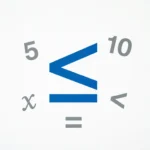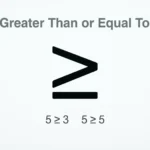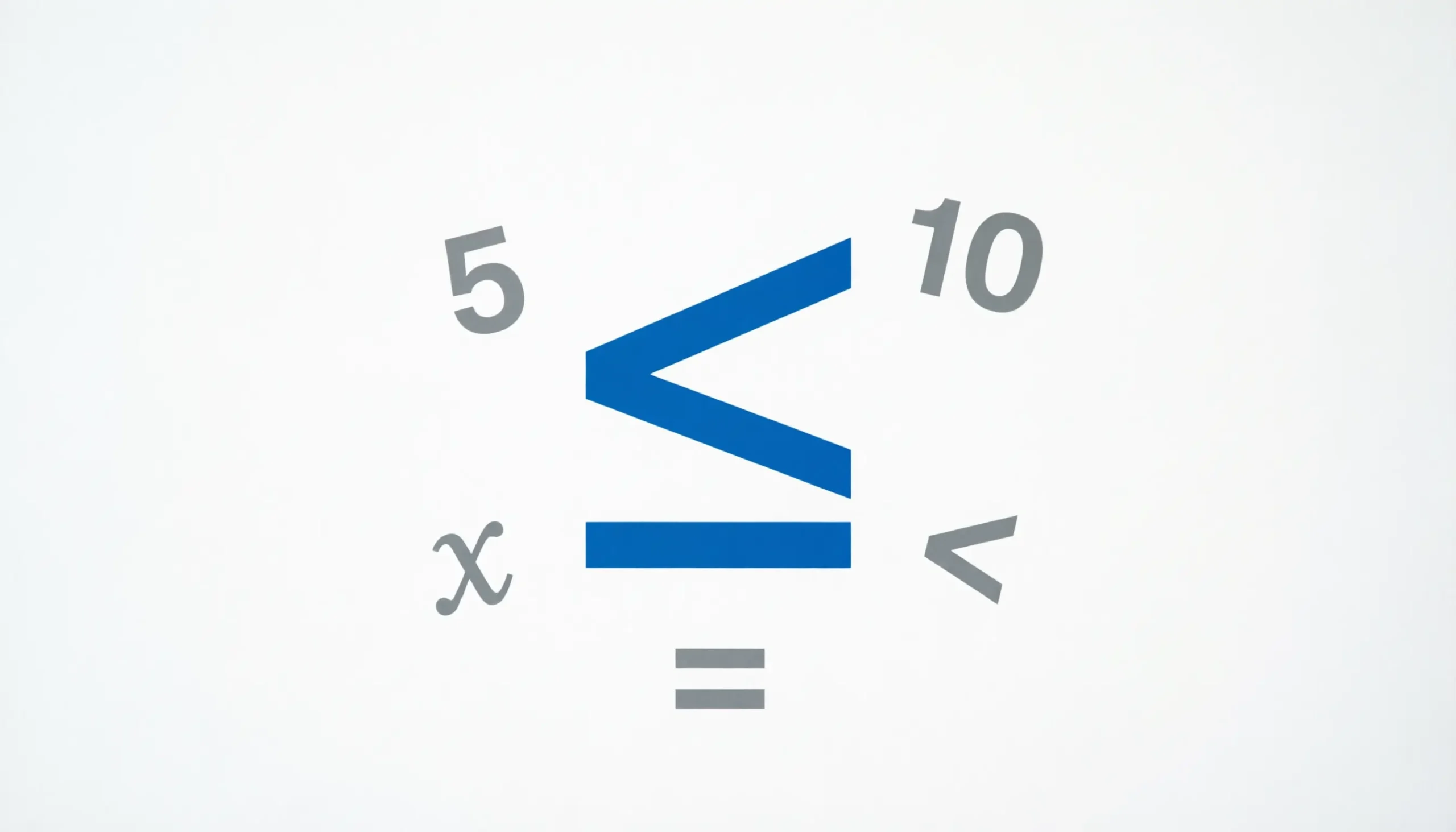
The less than or equal to sign (≤) is one of the most important symbols in mathematics, coding, and data analysis.
Yet many students, professionals, and beginners still search for it because they are unsure what it means, how to type it, or when to use it correctly.
This symbol often appears in school math problems, programming conditions, Excel formulas, and even business reports.
The confusion usually comes from mixing it up with the “less than” sign (<) or misunderstanding its meaning in equations.
People also search for this keyword because they want a quick answer, proper usage examples, and a clear explanation without complex math language.
In simple terms, the less than or equal to sign shows that one value is either smaller than or exactly equal to another value. For example, x ≤ 10 means x can be 10 or anything less than 10.
This article will break down everything in a simple way so you can fully understand and use it correctly in daily life, studies, or work.
Less Than or Equal To Sign (≤)
The less than or equal to sign (≤) means that a number or value is either smaller than or exactly equal to another value.
Examples:
- x ≤ 5 → x can be 5, 4, 3, 2, 1, etc.
- Age ≤ 18 → Age must be 18 or younger
- Score ≤ 100 → Score cannot exceed 100
It is widely used in math, programming, and data rules.
The Origin of Less Than or Equal To Sign
The less than or equal to sign (≤) comes from mathematical notation developed in the 19th and 20th centuries.
- The “less than” symbol (<) was introduced earlier in mathematics.
- The “equal to” symbol (=) was added later.
- Mathematicians combined them to create ≤ for simplicity.
- The symbol helps represent conditions more clearly in equations and logic.
Today, it is used globally in mathematics, computer science, and engineering.
British English vs American English Spelling
| Aspect | American English | British English |
|---|---|---|
| Name of symbol | less than or equal to sign | less than or equal to sign |
| Usage in schools | Common in algebra | Same usage |
| Technical writing | “≤ symbol” often used | Same usage |
| Coding context | Widely used | Widely used |
Which Spelling Should You Use?
- USA: Use “less than or equal to sign”
- UK/Commonwealth: Same term is standard
- Global coding/math use: Always use “≤” or “less than or equal to”
👉 In most cases, the symbol (≤) is universal and preferred in technical writing.
Common Mistakes with Less Than or Equal To Sign
- Confusing < with ≤
- Wrong: x < 10 (when 10 is allowed)
- Correct: x ≤ 10
- Using it backward
- Wrong: 10 ≤ x when meaning is unclear
- Correct usage depends on context
- Ignoring equality part
- Many users forget that “equal to” is included
- Typing errors in coding
- Some write =< instead of ≤
Less Than or Equal To Sign in Everyday Examples
In School Math:
- Solve: x ≤ 15
In Programming:
- if (age ≤ 18) → show “minor”
In Business:
- Budget ≤ $5000
In Social Media/Forms:
- Age must be ≤ 13 to create account
In Reports:
- Sales ≤ target value
Less Than or Equal To Sign Google Trends & Usage Data
The keyword “less than or equal to sign” is commonly searched worldwide, especially in:
- Students during exam season
- Programming beginners learning conditions
- Excel and data users
- Math learners in schools
📊 Usage patterns show:
- High interest in education related searches
- Strong demand in coding tutorials
- Frequent searches during homework help periods
👉 It is a consistent evergreen search term, not a seasonal trend.
Comparison Table Variations of the Keyword
| Variation | Meaning |
|---|---|
| ≤ | Symbol for “less than or equal to” |
| Less than or equal to | Full phrase |
| Less than or equal | Short variation |
| LEQ sign | Abbreviation used in notes |
FAQs Less Than or Equal To Sign
1. What does ≤ mean in math?
It means “less than or equal to.”
2. How do I type ≤ on a keyboard?
Use Alt + 243 (Windows) or copy paste the symbol.
3. Is ≤ the same as <?
No. ≤ includes equality, while < does not.
4. Where is the less than or equal to sign used?
It is used in math, coding, Excel, and logic conditions.
5. What is the opposite of ≤?
The opposite is ≥ (greater than or equal to).
6. Is ≤ used in programming?
Yes, it is used in conditions like if statements.
7. Why is the symbol important?
It helps define limits and conditions clearly in equations.
Conclusion
The less than or equal to sign (≤) is a simple but powerful mathematical symbol used across education, programming, and real life problem solving.
It tells us that a value can be smaller than or exactly equal to another value, making it essential for equations, comparisons, and logic based decisions.
Understanding this symbol helps students solve math problems faster and helps developers write accurate conditions in code.
It also appears in business rules, data limits, and everyday instructions like age or budget restrictions.
While it may look confusing at first, the meaning becomes clear once you see real examples. Remember: “≤” always includes equality.
If you are a student, coder, or professional, mastering this symbol improves clarity and precision in your work.
Keep practicing with examples, and it will become second nature in no time.

Hi, I’m Virginia Woolf, a language enthusiast passionate about exploring the power of words and their meanings. I specialize in helping readers choose the right words through clear comparisons, synonyms, and practical usage. My goal is to make vocabulary learning simple, engaging, and useful for everyday communication. picktheword.com