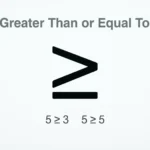
The greater than or equal to sign (≥) is one of the most commonly used symbols in mathematics, programming, and data analysis.
Yet, many people still search for it because they forget its exact shape, meaning, or how to type it on different devices.
Some confuse it with the simple greater than sign (>), while others are unsure when to use “greater than or equal to” in real life problems like equations, spreadsheets, or coding.
This keyword is often searched by students, teachers, developers, and professionals who work with numbers.
It solves a simple but important problem: how to correctly compare values when one number is larger or equal to another.
For example, in math, x ≥ 5 means x can be 5 or any number greater than 5. In programming, it helps set conditions like “if score ≥ 50, then pass.”
Understanding this symbol makes math easier, avoids errors in coding, and improves clarity in data work.
In this guide, you will learn its meaning, origin, correct usage, common mistakes, and real world examples in a very simple way.
Greater Than or Equal To Sign
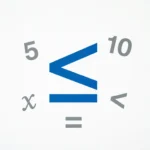
The greater than or equal to sign (≥) means a value is either greater than or equal to another value.
Examples:
- x ≥ 10 → x can be 10, 11, 12, and so on
- age ≥ 18 → age is 18 or above
- score ≥ 50 → pass mark is 50 or more
It is widely used in math, coding, spreadsheets, and science.
The Origin of Greater Than or Equal To Sign
The “greater than” symbol (>) comes from early mathematical notation used in the 1600s. It was created to compare numbers easily.
The “equal to” symbol (=) was introduced later by Robert Recorde in 1557. Over time, mathematicians combined both symbols to create ≥, meaning “greater than OR equal to.”
This combination helped simplify mathematical expressions and reduce writing length in equations and logic statements.
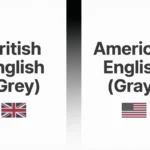
British English vs American English Spelling
| Feature | British English | American English |
|---|---|---|
| Symbol name | Greater than or equal to sign | Greater than or equal to sign |
| Writing style | “is greater than or equal to” | Same wording |
| Usage frequency | Mathematics + education | Mathematics + programming |
| Symbol format | ≥ | ≥ |
Which Spelling Should You Use?
- US learners & developers: Use “greater than or equal to”
- UK/Commonwealth students: Same phrase is used
- Global usage: The term is universal in math and coding
In short, you do not need to worry about spelling differences. The symbol and meaning stay the same worldwide.
Common Mistakes with Greater Than or Equal To Sign
- ❌ Confusing ≥ with >
- ❌ Writing “=>” instead of ≥
- ❌ Using = instead of ≥
- ❌ Reversing the symbol (≤ instead of ≥)
- ❌ Typing incorrect code syntax in programming languages
✔ Correct: x ≥ 10
❌ Wrong: x => 10
Greater Than or Equal To Sign in Everyday Examples
- Math class: Solve x ≥ 5
- Emails: “Applicants must be ≥ 18 years old”
- Social media stats: “Followers ≥ 10,000”
- Programming: if (score ≥ 50) pass
- Spreadsheets: Excel formulas like =IF(A1≥10,”Yes”,”No”)
- News reports: “Inflation ≥ 5% this quarter”
Greater Than or Equal To Sign Google Trends & Usage Data
Search interest for “greater than or equal to sign” is highest in:
- India 🇮🇳
- United States 🇺🇸
- United Kingdom 🇬🇧
- Pakistan 🇵🇰
- Philippines 🇵🇭
It is most searched during:
- Exam seasons
- Coding tutorials
- Math homework help
- Spreadsheet learning (Excel, Google Sheets)
The keyword is highly popular in education and programming contexts.
Comparison Table: Symbol Variations
| Symbol | Meaning | Example |
|---|---|---|
| > | Greater than | x > 5 |
| < | Less than | x < 5 |
| ≥ | Greater than or equal to | x ≥ 5 |
| ≤ | Less than or equal to | x ≤ 5 |
FAQs
1. What does the greater than or equal to sign mean?
It means a value is either greater than or exactly equal to another value.
2. How do you type ≥ on a keyboard?
Use Alt + 242 (Windows) or copy paste the symbol (≥).
3. Is ≥ used in coding?
Yes, it is used in programming languages like Python, Java, and C++.
4. What is the difference between > and ≥?
means only greater, while ≥ includes equal value too.
5. Can ≥ be used in Excel?
Yes, it is used in formulas and logical conditions.
6. Is there a spelling difference in UK and US English?
No, both use the same phrase and symbol.
7. Why is the symbol important?
It helps compare numbers correctly in math, science, and programming.
Conclusion
The greater than or equal to sign (≥) is a simple but powerful symbol used in math, coding, and data work.
It combines two ideas: “greater than” and “equal to,” making it very useful in comparisons and logical conditions.
Whether you are solving equations, writing code, or working with spreadsheets, this symbol helps you express conditions clearly and correctly.
Many people search for it because they confuse it with similar symbols or forget how to use it in real tasks.
Once understood, it becomes easy to apply in school, work, and daily digital tasks.
The symbol is universal, so there is no difference between British and American usage.
By mastering ≥, you improve your math accuracy, coding logic, and data handling skills.
It is a small symbol, but it plays a big role in clear communication of numbers and conditions.