Have you ever seen the words gray and grey and wondered which one is correct? Many English learners get confused because both spellings appear in books, websites, movies, and everyday writing.
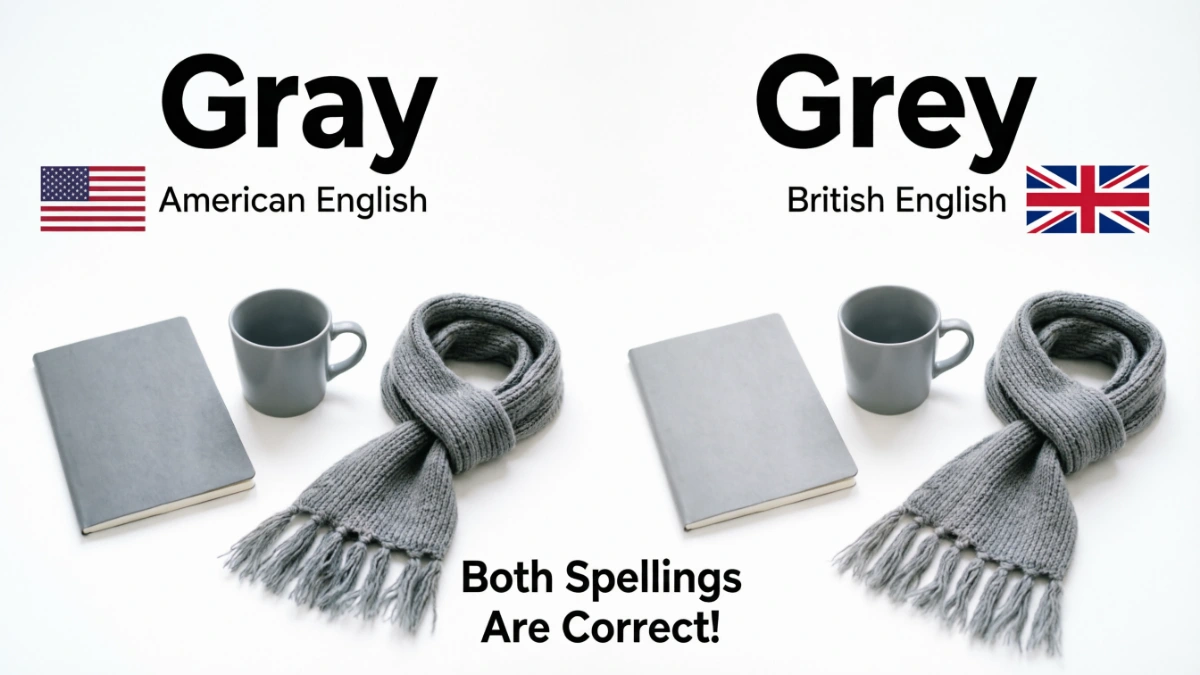
The good news is that both gray and grey are correct. They have the same meaning and refer to the color between black and white. The only real difference is the type of English being used.
In this guide, you’ll learn the simple difference between gray and grey, when to use each spelling, and easy tips to remember them.
We’ll also answer common questions, provide real life examples, and help you choose the right spelling with confidence in any writing situation.
Quick Answer
Both gray and grey refer to the same color between black and white.
- Gray is the preferred spelling in American English.
- Grey is the preferred spelling in British English and most other English speaking countries.
Choose the spelling that matches the type of English you are using, and stay consistent throughout your writing.
What Do Gray and Grey Mean?
Gray and grey are simply two different spellings of the same word.
The color gray (or grey) is a neutral shade that falls between black and white. It is often used to describe:
- Hair
- Clouds
- Animals
- Clothing
- Buildings
- Weather
- Paint
- Emotions or moods in some expressions
Examples:
- The sky turned gray before the storm.
- She wore a beautiful grey sweater.
- His hair became gray over the years.
The meaning never changes. Only the spelling does.
Gray vs Grey: What’s the Difference?
The biggest difference is regional spelling.
| American English 🇺🇸 | British English 🇬🇧 |
|---|---|
| gray | grey |
| gray hair | grey hair |
| gray sky | grey sky |
| gray paint | grey paint |
Think of it this way:
- A in grAy matches America.
- E in grEy matches England.
This simple memory trick helps many learners remember which spelling belongs to which variety of English.
Why Are There Two Spellings?
English has changed over hundreds of years, and many words developed different spellings in different countries.
When American English became more standardized, gray became the preferred spelling in the United States.
Meanwhile, grey remained the standard spelling in:
- The United Kingdom
- Canada (often prefers grey)
- Australia
- New Zealand
- Ireland
Even though one spelling is more common in each region, people will usually understand both.
Which Spelling Should You Use?
The best choice depends on your audience.
Use gray if you’re writing for:
- American readers
- U.S. schools
- American businesses
- U.S. websites
Examples:
- Gray walls
- Gray clouds
- Gray sweater
Use grey if you’re writing for:
- British readers
- UK schools
- Australian audiences
- Canadian audiences
- International publications that follow British English
Examples:
- Grey trousers
- Grey sky
- Grey stone
The most important rule is to stay consistent.
Do not switch between gray and grey in the same document unless you are discussing the spelling difference itself.
Is One More Correct Than the Other?
No.
Both spellings are accepted by dictionaries and English teachers.
Neither spelling is more formal, more modern, or more accurate.
The only difference is regional preference.
| Question | Answer |
|---|---|
| Is gray correct? | ✅ Yes |
| Is grey correct? | ✅ Yes |
| Do they have different meanings? | ❌ No |
| Should I mix both spellings? | ❌ No |
Gray vs Grey in Different Types of Writing
Formal Writing
Use the spelling that matches your style guide.
Examples:
- The report described the building as gray. (American English)
- The report described the building as grey. (British English)
Informal Writing
Either spelling works if it matches your audience.
Examples:
- I bought a gray hoodie yesterday.
- I really like your grey jacket.
Academic Writing
Most schools expect you to follow one variety of English consistently.
If your essay uses American English, write gray throughout.
If it uses British English, write grey throughout.
Example Sentences
Here are some natural examples.
- The cat has soft gray fur.
- The old castle was built with grey stone.
- My grandfather’s hair is completely gray now.
- Dark grey clouds covered the sky.
- She painted her bedroom gray.
- He wore a light grey suit to the wedding.
- The road looked gray after the rain.
- I prefer grey furniture because it matches everything.
- The artist mixed black and white to create gray.
- The grey blanket kept us warm.
- Her gray eyes stood out in the sunlight.
- The bird had beautiful grey feathers.
Common Mistakes Learners Make
Here are mistakes that often cause confusion.
| Incorrect | Correct | Why? |
|---|---|---|
| My essay uses gray and grey randomly. | Choose one spelling and use it consistently. | Mixing spellings looks inconsistent. |
| Grey is wrong. | Grey is correct in British English. | Both spellings are correct. |
| Gray and grey have different meanings. | They mean exactly the same color. | Only the spelling changes. |
| American essays should use grey throughout. | American writing usually uses gray. | Match the regional style. |
Why learners get confused:
- Movies and books use different English varieties.
- The internet contains both spellings.
- Spell checkers follow regional language settings.
Similar or Confused Words
Some learners confuse gray/grey with other words.
Grey vs Gray
Same meaning.
Different regional spelling.
Greyish or Grayish
Both are correct.
- Grayish is American English.
- Greyish is British English.
Examples:
- The water looked grayish.
- The walls appeared greyish.
Gray Hair vs Grey Hair
Both describe hair that has lost its natural color.
The spelling depends on the variety of English.
Gray Color vs Grey Color
These phrases mean exactly the same thing.
The word color is American English, while colour is British English.
Examples:
- Gray color (American English)
- Grey colour (British English)
Modern Usage Preferences
Today, both spellings appear widely online.
However, most publications still follow regional standards.
- American news websites usually write gray.
- British newspapers usually write grey.
- International companies often follow whichever style guide they have chosen.
Many software programs automatically check spelling based on your language settings.
Quick Tips to Remember
- Gray = America (both contain the letter A).
- Grey = England (both contain the letter E).
- Both spellings describe the same color.
- Don’t mix both spellings in one piece of writing.
- Follow your school’s or company’s preferred style.
FAQs
Is gray or grey correct?
Both are correct. Gray is American English, while grey is British English.
Which spelling is used in the United States?
American English almost always uses gray.
Which spelling is used in the United Kingdom?
British English normally uses grey.
Do gray and grey have different meanings?
No. They both refer to the same color between black and white.
Is grey accepted in American English?
Yes, people understand it, but gray is the preferred American spelling.
Which spelling should students use?
Use the spelling that matches your teacher’s required style or your country’s standard English.
Can I use both gray and grey in the same article?
It’s better not to. Choose one spelling and use it consistently throughout your writing.
Conclusion
Choosing between gray and grey is simple once you know the regional difference. Both spellings refer to the same color between black and white, and neither is more correct than the other.
The only difference is that gray is the preferred spelling in American English, while grey is commonly used in British English and many other English speaking countries.
When writing, think about your audience and use the spelling that matches the type of English you are following.
Most importantly, stay consistent throughout your document instead of switching between both forms.
By remembering this simple rule, you can write with greater confidence and avoid unnecessary spelling confusion in school, work, or everyday communication.