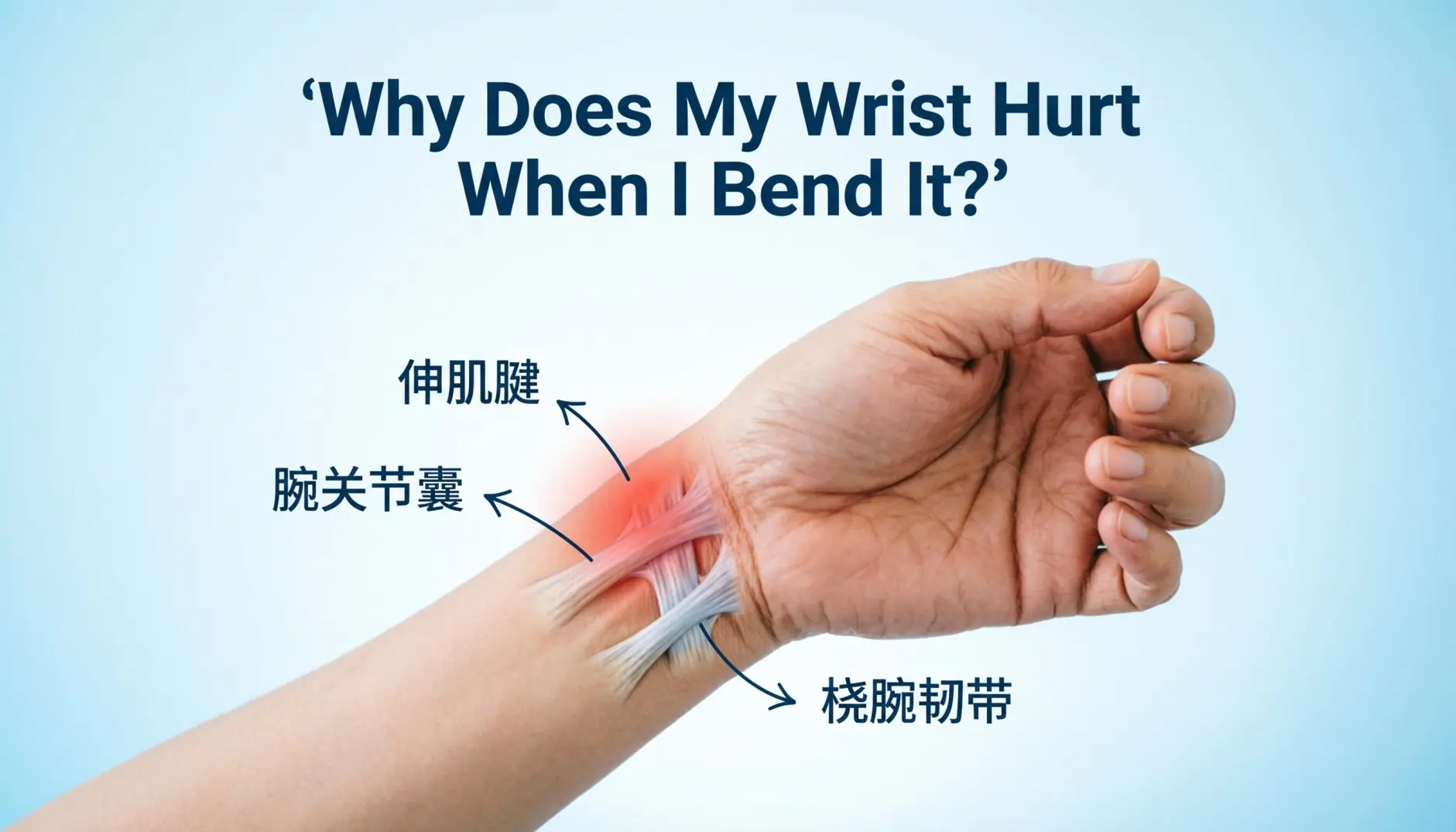
If your wrist hurts when you bend it or put pressure on it, you are probably wondering what is causing the pain and whether it is something serious.
Wrist pain is a common problem that can happen after an injury, repetitive hand movements, sports activities, or even everyday tasks like typing and lifting objects.
In many cases, wrist pain is caused by a strain, sprain, or overuse injury. However, sometimes it may be linked to conditions such as tendonitis, carpal tunnel syndrome, or arthritis.
Understanding the cause of your pain can help you choose the right treatment and know when to seek medical care.
Quick Answer
If your wrist hurts when you bend it or put pressure on it, the most common causes include a wrist sprain, tendon inflammation, muscle strain, repetitive stress injury, or arthritis. Mild cases often improve with rest, ice, and avoiding activities that worsen the pain. If the pain is severe, lasts for several weeks, or is accompanied by swelling, numbness, or weakness, you should see a healthcare professional.
Why Does My Wrist Hurt When I Bend It?
Your wrist contains many small bones, ligaments, tendons, muscles, and nerves that work together to help you move your hand. Pain can occur when any of these structures become injured or irritated.
Common reasons include:
- Overusing the wrist during work or sports
- Lifting heavy objects incorrectly
- Falling onto an outstretched hand
- Repetitive typing or computer use
- Inflammation of tendons
- Joint wear and tear
The exact location of the pain often provides clues about the cause.
Common Causes of Wrist Pain When Bending or Applying Pressure
1. Wrist Sprain
A wrist sprain happens when the ligaments that connect bones become stretched or torn.
Symptoms may include:
- Pain when moving the wrist
- Swelling
- Bruising
- Tenderness
- Difficulty gripping objects
Sprains often occur after falls, sports injuries, or sudden twisting movements.
2. Tendonitis
Tendonitis occurs when the tendons around the wrist become inflamed.
Common causes:
- Repetitive movements
- Typing for long periods
- Racquet sports
- Weightlifting
Symptoms include:
- Aching pain
- Tenderness
- Pain during movement
- Mild swelling
The pain often becomes worse when bending the wrist.
3. Repetitive Strain Injury (RSI)
RSI develops from performing the same hand and wrist movements repeatedly.
Common examples include:
- Computer work
- Gaming
- Assembly line work
- Writing for long periods
Symptoms may include:
- Pain
- Stiffness
- Weakness
- Tingling sensations
4. Carpal Tunnel Syndrome
Carpal tunnel syndrome occurs when the median nerve becomes compressed inside the wrist.
Common symptoms:
- Wrist pain
- Numbness in the thumb and fingers
- Tingling sensations
- Weak grip strength
Pain may become more noticeable when bending the wrist or putting weight on the hand
5. Arthritis
Arthritis can affect the wrist joint and cause ongoing pain.
Types of Arthritis
| Type | Description |
|---|---|
| Osteoarthritis | Joint wear and tear over time, usually due to aging or repeated use |
| Rheumatoid Arthritis | Autoimmune disease where the immune system attacks joint tissues, causing inflammation and pain |
Symptoms often include:
- Joint stiffness
- Swelling
- Reduced range of motion
- Pain during movement
6. Ganglion Cyst
A ganglion cyst is a fluid filled lump that commonly develops on the wrist.
It may cause:
- Pain during wrist movement
- Pressure sensations
- Reduced flexibility
The discomfort often increases when pressure is applied to the wrist.
7. Wrist Fracture
Sometimes pain after a fall may indicate a small fracture rather than a simple sprain.
Possible signs:
- Severe pain
- Significant swelling
- Bruising
- Difficulty moving the wrist
Medical evaluation is important if a fracture is suspected.
What Does the Location of Wrist Pain Mean?
Wrist Pain Locations and Possible Causes
| Pain Location | Possible Cause |
|---|---|
| Thumb side of wrist | Tendonitis, sprain |
| Center of wrist | Carpal tunnel syndrome, strain |
| Pinky side of wrist | Ligament injury, tendon problems |
| Entire wrist | Arthritis, fracture, severe sprain |
While location can provide clues, only a healthcare provider can make an accurate diagnosis.
How to Treat Wrist Pain at Home
For mild wrist pain, home treatment often helps.
Follow the RICE Method
R Rest
Avoid activities that worsen the pain.
I Ice
Apply an ice pack for 1520 minutes several times daily.
C Compression
Use a wrist brace or elastic bandage if recommended.
E Elevation
Keep the wrist elevated above heart level when possible.
Other Helpful Treatments
- Gentle stretching exercises
- Over the counter pain relievers
- Ergonomic keyboard and mouse setup
- Taking regular breaks from repetitive activities
Do not continue activities that cause sharp pain.
When Should You See a Doctor?
Seek medical attention if:
- Pain lasts longer than two weeks
- You cannot move your wrist normally
- Swelling is severe
- The wrist looks deformed
- You experience numbness or tingling
- You have weakness in your hand
- Pain follows a significant injury or fall
Early treatment can prevent long term problems.
Can Wrist Pain Go Away on Its Own?
Yes, many mild wrist injuries improve within a few days or weeks with proper rest and care.
Recovery Time by Condition
| Condition | Typical Recovery Time |
|---|---|
| Mild strain | Few days to 2 weeks |
| Sprain | 2–8 weeks |
| Tendonitis | Several weeks |
| Fracture | 6–12 weeks or longer |
| Arthritis | Ongoing management |
Ignoring persistent pain may delay healing.
Usage Examples
Formal Writing
- The patient reported wrist pain when bending the joint.
- Pressure applied to the wrist increased discomfort significantly.
- A medical evaluation was recommended after persistent symptoms.
Informal Writing
- My wrist hurts every time I bend it.
- I cannot do push ups because my wrist hurts when I put pressure on it.
- The pain started after lifting heavy boxes.
- My wrist feels fine until I try to lean on it.
Academic Writing
- Repetitive wrist movements may contribute to tendon inflammation.
- Wrist pain is commonly associated with overuse injuries.
- Early intervention may improve recovery outcomes.
- Researchers found that repetitive strain can affect wrist function.
- Proper ergonomics can reduce stress on wrist joints.
Common Mistakes
Many people misunderstand wrist pain and delay treatment.
| Mistake | Better Approach |
|---|---|
| Ignoring pain for months | Seek medical advice if symptoms persist |
| Continuing painful activities | Rest the wrist until symptoms improve |
| Assuming every injury is a sprain | Consider fractures or nerve problems |
| Using heat immediately after injury | Start with ice during the first 48 hours |
Why People Get Confused
Many wrist conditions produce similar symptoms. A sprain, tendonitis, and carpal tunnel syndrome can all cause pain when bending the wrist. This is why proper diagnosis is important if symptoms continue.
Similar Conditions Often Confused With Wrist Pain
Several conditions can feel similar.
Tendonitis vs Sprain
| Tendonitis | Sprain |
| Tendon inflammation | Ligament injury |
| Often caused by overuse | Often caused by sudden injury |
| Pain with movement | Pain with movement and swelling |
Carpal Tunnel Syndrome vs Tendonitis
| Carpal Tunnel | Tendonitis |
| Numbness and tingling common | Usually no numbness |
| Nerve related condition | Tendon related condition |
| May affect fingers | Usually affects movement |
Understanding the differences can help identify when professional care is needed.
Modern Lifestyle Factors That Cause Wrist Pain
Today, wrist pain is often linked to technology and repetitive activities.
Common modern causes include:
- Long hours of typing
- Smartphone use
- Video gaming
- Remote work setups
- Weight training
- Repetitive workplace tasks
Using proper posture and ergonomic equipment can help reduce stress on the wrist.
Quick Tips to Remember
- Pain when bending the wrist often points to a strain, sprain, or tendon problem.
- Rest is one of the most important parts of recovery.
- Ice is usually best during the first 48 hours after injury.
- Numbness or tingling may suggest nerve involvement.
- Persistent pain should be evaluated by a healthcare professional.
Easy Memory Trick
PAIN = Pause Activities Immediately Now
If an activity causes wrist pain, stop and give the wrist time to recover.
FAQ
Why does my wrist hurt when I put pressure on it?
The most common reasons are a wrist sprain, tendonitis, repetitive strain injury, or inflammation in the joint.
Why does my wrist hurt during push ups?
Push ups place significant pressure on the wrist joint. Pain may result from tendonitis, sprains, poor wrist mobility, or previous injuries.
Can wrist pain be a sign of arthritis?
Yes. Arthritis can cause pain, stiffness, swelling, and discomfort during wrist movement.
How long does a wrist sprain take to heal?
A mild sprain may heal within a few weeks, while severe sprains can take several months.
Should I exercise with wrist pain?
Avoid exercises that increase pain. Gentle movement may help recovery, but severe pain should be evaluated by a healthcare professional.
Why does my wrist hurt but there is no swelling?
Not all wrist conditions cause swelling. Tendonitis, nerve compression, and repetitive strain injuries often cause pain without visible swelling.
When is wrist pain an emergency?
Seek urgent medical care if the wrist appears deformed, severe pain follows an injury, or you lose sensation or movement in your hand.
Conclusion
If your wrist hurts when you bend it or put pressure on it, the cause is often a sprain, strain, tendonitis, or another common wrist condition.
Most mild cases improve with rest, ice, and avoiding activities that aggravate the pain. However, persistent pain, numbness, weakness, or significant swelling should not be ignored.
Paying attention to your symptoms and seeking medical advice when needed can help you recover faster and prevent long term problems.

Hi, I’m Virginia Woolf, a language enthusiast passionate about exploring the power of words and their meanings. I specialize in helping readers choose the right words through clear comparisons, synonyms, and practical usage. My goal is to make vocabulary learning simple, engaging, and useful for everyday communication. picktheword.com