Waiting after submitting a job application can feel awkward. You may want to show interest, but you also do not want to sound impatient, desperate, or as if you are demanding an answer. The hardest part is often simple: what to say when calling about a job application.
A good follow up call does not need to be long. Your goal is to identify yourself, name the position, explain why you are calling, and give the employer an easy opportunity to respond. If appropriate, you can also ask about the hiring timeline or whether they need anything else from you.
The right approach depends on the job posting, the company, how you applied, and whether you have already interviewed. Some employers welcome calls, while others specifically ask applicants to use an online portal or avoid phone inquiries. Current career guidance consistently emphasizes following the employer’s instructions and keeping phone follow ups brief and professional.
This guide gives you practical scripts for different situations, including calling after applying online, leaving a voicemail, speaking with a receptionist, following up after an interview, and asking politely about your application status.
Quick Answer:
What should you say when calling about a job application?
Say who you are, identify the position and when you applied, then briefly explain that you are calling to follow up. For example: “Hi, my name is [Name]. I recently applied for the [Job Title] position and wanted to check if there are any updates on my application or the hiring timeline. I’m still very interested in the role and would be happy to provide any additional information.”
What should you say when calling about a job application?
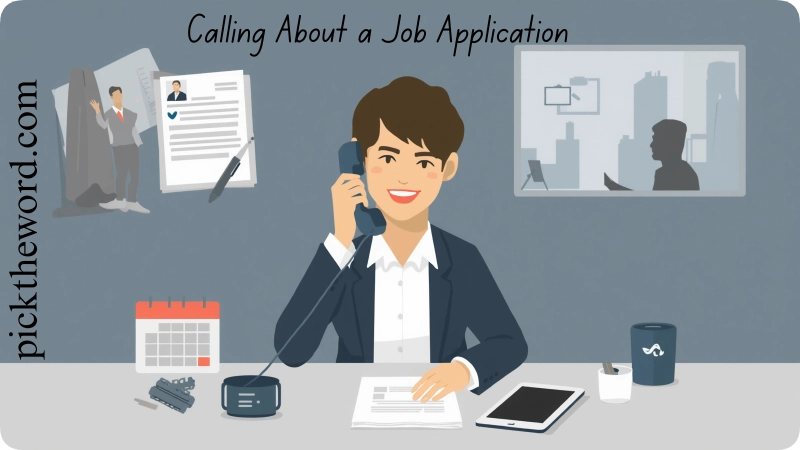
Start with your name, the job title, when you applied, and a polite reason for calling.
A simple structure works well:
- Introduce yourself.
- Mention the position.
- Say when you submitted your application.
- Explain that you are following up.
- Ask whether there is an update or expected timeline.
- Offer additional information if needed.
- Thank the person for their time.
Ready to use phone script
“Hello, my name is [Your Name]. I recently applied for the [Job Title] position on [Date], and I’m calling to follow up on my application. I’m very interested in the opportunity and wanted to ask whether there have been any updates on the hiring process. I’d be happy to provide any additional information if needed. Thank you for your time.”
Why it works:
The script is specific without being demanding. The employer immediately knows who you are, what role you applied for, and what you need.
In practice:
If the person says, “We’re still reviewing applications,” do not try to force a decision. A useful response is:
“Thank you for letting me know. Do you have an estimated timeline for when candidates might hear about the next steps?”
This keeps the conversation focused and professional.
What should you say when calling after applying online?
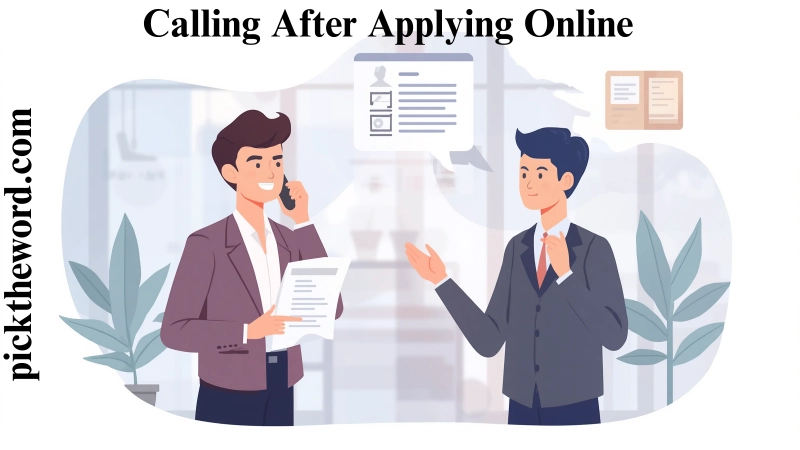
When you applied online, confirm whether phone follow up is appropriate before calling.
First reread the job advertisement. If it says “please do not call” or directs applicants to communicate only through an application portal, follow those instructions. Ignoring them can work against you.
If phone contact is appropriate, try:
“Hi, my name is [Name]. I recently submitted an online application for the [Job Title] position. I’m calling to confirm that my application was received and to see whether there is an expected timeline for the hiring process. I’m very interested in the position and appreciate your time.”
Should you call after applying for a job online?
You can, but a phone call is not automatically the best choice. Consider calling when the employer provides a contact number, the job posting welcomes inquiries, you have already spoken with someone at the company, or phone communication is normal for that type of workplace.
For many professional roles, an email or other requested communication channel may be more appropriate. Current career guidance also recommends respecting the employer’s stated contact preferences.
Quick Take:
Do not call simply because you are anxious about waiting. Call because you have a professional reason and an appropriate way to contact the employer.
What do you say when a receptionist or assistant answers?
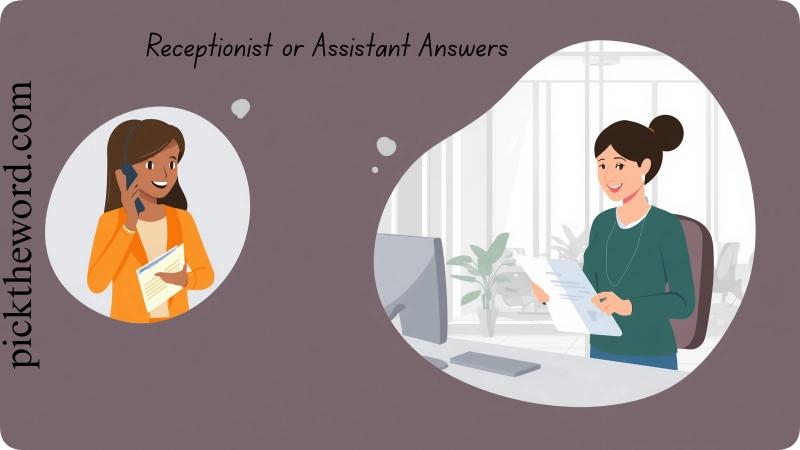
Keep your request short and ask for the appropriate person rather than launching into your entire application history.
Try:
“Good morning. My name is [Name]. I recently applied for the [Job Title] position, and I’m calling to follow up on my application. Could you please let me know who would be the best person to speak with?”
If the receptionist says the hiring manager is unavailable:
“No problem. Would it be possible to leave a brief message for them?”
If they offer to take a message:
“Thank you. Please let them know that [Your Name] called regarding my application for the [Job Title] position submitted on [Date]. I’m still very interested in the opportunity, and they can reach me at [Phone Number].”
Why it works:
A receptionist or assistant may not be involved in the hiring decision. Respecting their role keeps the interaction courteous and prevents you from putting them in an uncomfortable position.
In practice:
You do not need to convince the receptionist that you are the perfect candidate. Your objective is simply to get the correct contact or leave a clear message.
What should you say if the hiring manager answers?
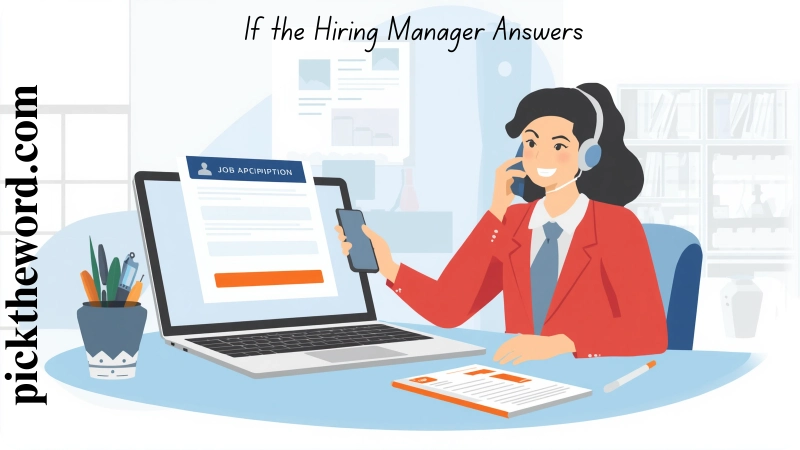
Ask whether it is a convenient time to speak, then get to the point quickly.
A strong opening is:
“Hi [Manager’s Name], this is [Your Name]. I hope I’m catching you at a good time. I recently applied for the [Job Title] position and wanted to briefly follow up on my application.”
If they say they have time:
“Thank you. I’m still very interested in the position and wanted to ask whether there are any updates on the hiring process or an expected timeline for next steps.”
You can then add one relevant qualification:
“I was particularly interested in the role because of my experience with [specific skill or responsibility], which I believe aligns well with the position.”
Why it works:
Asking whether they have time shows consideration. You are also giving the hiring manager room to control how long the conversation lasts.
Avoid turning the follow up into a five minute sales pitch unless they invite you to continue.
What should you say when following up after an interview?
After an interview, thank the interviewer, identify the position, express continued interest, and ask about next steps.
Try:
“Hi [Name], this is [Your Name]. Thank you again for speaking with me about the [Job Title] position on [Date]. I’m calling to follow up and see whether there are any updates regarding the next steps. I remain very interested in the opportunity and would be happy to provide anything else you need.”
If they already gave you a timeline:
“You mentioned that you expected to make a decision around [time/date], so I wanted to check in and see whether there have been any updates.”
Why it works:
You are connecting your follow up to the hiring process rather than calling randomly. It also reinforces interest without demanding a favorable result.
Career guidance commonly recommends following up after an interview while keeping communication professional and adaptable to the employer’s timeline.
In practice:
If the interviewer says, “We haven’t made a decision yet,” you can simply say:
“I understand. Thank you for the update. I appreciate your time, and I’m still very interested. Please let me know if I can provide anything else.”
What should you say if you reach voicemail?
Leave a short message that contains your name, position, reason for calling, phone number, and a polite closing.
Job application voicemail sample
“Hello [Name], this is [Your Name]. I’m calling to follow up on my application for the [Job Title] position, which I submitted on [Date]. I’m still very interested in the opportunity and wanted to check whether there are any updates on the hiring timeline. You can reach me at [Phone Number]. Thank you, and I hope to speak with you soon.”
A voicemail should be concise. Current guidance from Indeed and Monster similarly recommends identifying yourself, naming the position, stating the purpose, giving your contact information, and thanking the recipient.
Quick Take:
Do not use voicemail to tell your entire career story. Give enough information for the employer to identify you and decide whether to return your call.
How do you politely ask about your application status?
Use “I’m following up” or “I wanted to check on the status” rather than demanding to know why nobody has responded.
Professional examples include:
- “I wanted to follow up on the status of my application.”
- “I’m calling to see whether there have been any updates regarding the position.”
- “Could you let me know whether there is an expected timeline for the next steps?”
- “I wanted to check whether my application has moved forward in the hiring process.”
- “Please let me know if there is any additional information I can provide.”
What is a good follow up question?
Instead of:
“Why haven’t I heard anything yet?”
Try:
“Do you have an updated timeline for when applicants can expect to hear about next steps?”
Why it works:
The second version asks for useful information without blaming the employer.
The goal is to learn what happens next not to make the other person defend the delay.
What should you say when applying for a job in person?
When applying in person, introduce yourself confidently, name the position, and ask whether applications are being accepted or who handles hiring.
For example:
“Good afternoon. My name is [Name]. I’m interested in the [Job Title] position and wanted to ask whether you’re currently accepting applications. I have experience in [relevant area], and I’d be happy to provide my résumé.”
If the employer says applications must be submitted online:
“Thank you. I’ll submit it through the website. Is there a particular person or department I should address it to?”
If you have already applied online:
“I recently submitted an application for the [Job Title] position online and wanted to introduce myself and ask whether there is anything else I should provide.”
Why it works:
In person communication should feel natural rather than rehearsed. A short introduction is usually stronger than immediately delivering a long explanation of your qualifications.
Context note:
Expectations can vary by industry, company size, and local workplace culture. In some customer facing or smaller businesses, an in person introduction may feel normal; in other workplaces, online applications are strictly preferred.
What should you say if you have not heard back after following up?
If your first follow up receives no response, avoid repeated calls and give the employer reasonable space.
You can make one concise follow up through an appropriate channel:
“Hello [Name], I’m following up once more regarding my application for the [Job Title] position. I remain interested in the opportunity and wanted to check whether there are any updates. I understand you may still be reviewing candidates, and I appreciate your time.”
If there is still no response, continue your job search rather than repeatedly contacting the same person.
Monster’s current guidance includes knowing when to move on, while other career resources recommend keeping follow ups professional rather than excessive.
In practice:
No response does not necessarily tell you exactly why the employer has not replied. Your best move is to stay professional, avoid sounding frustrated, and continue applying elsewhere.
What should you say when calling about a job offer?
If you are calling about a job offer, confirm the offer details, express appreciation, and ask any necessary questions before accepting.
For example:
“Hello [Name], thank you again for offering me the [Job Title] position. I’m very excited about the opportunity. I wanted to clarify a few details about the offer, particularly the start date and [specific question], before I make my final decision.”
If you are ready to accept:
“Thank you for the offer. I’m pleased to accept the [Job Title] position. I appreciate the opportunity and look forward to joining the team.”
If you need time:
“Thank you very much for the offer. I’m excited about the opportunity. May I have until [date] to review the details and give you my final answer?”
Why it works:
A job offer call is different from an application status call. Once an offer exists, your purpose should be clear: clarify, accept, decline, or request appropriate time to consider it.
A Simple Formula for Any Job Application Follow Up Call
The easiest formula is: Name + Position + Date + Purpose + Question + Thanks.
You can memorize this:
“Hi, I’m [Name]. I applied for [Position] on [Date]. I’m calling to follow up on my application and ask whether there are any updates on the hiring timeline. I’m still very interested in the role and would be happy to provide anything else you need. Thank you for your time.”
This formula is flexible enough for most situations. You can shorten it if the person sounds busy or expand it if they invite you to talk.
What to Prepare Before Calling About a Job Application
Prepare the basic details before dialing so you can sound confident without reading a long script.
Have these details in front of you:
- Your full name
- Job title
- Company name
- Date you applied
- Where you applied
- Hiring manager or recruiter’s name, if known
- One or two relevant qualifications
- Your phone number
- One question about next steps
- A copy of your résumé or application
Also check the job posting again. Look for instructions about contacting the company, application deadlines, and the appropriate person or department.
Indeed, FlexJobs, and Monster all emphasize preparation, clarity, and respect for the employer’s preferred communication process.
When Is the Best Time to Call About a Job Application?
A practical default is to wait about one to two weeks after applying unless the employer gives you a different timeline.
If the job posting gives a specific application deadline or follow up date, use that information instead. FlexJobs, for example, advises paying attention to the dates and instructions in the posting before contacting an employer.
A simple decision rule is:
- The posting says “do not call”: Do not call.
- The posting gives a follow up date: Follow that date.
- You have a recruiter’s number and were encouraged to contact them: A call may be appropriate.
- You applied yesterday: Usually wait unless there is a specific reason to contact them.
- It has been around one to two weeks with no update: A brief follow up may be reasonable.
- You already interviewed: Follow the timeline given during the interview when possible.
There is no universal waiting period that fits every employer. Hiring processes differ, so the employer’s instructions should take priority over a generic rule.
What NOT to Say When Calling About a Job Application
Avoid language that sounds demanding, frustrated, entitled, or overly desperate.
1. “Why haven’t you called me yet?”
This sounds accusatory.
Better:
“I wanted to follow up and see whether there are any updates on the hiring process.”
2. “I really need this job.”
Your personal circumstances may be important to you, but they do not explain why you are a fit for the role.
Better:
“I’m very interested in the position and believe my experience in [skill] would allow me to contribute to the team.”
3. “Did I get the job?”
Unless you have already reached the final decision stage, this can put unnecessary pressure on the person.
Better:
“Could you share any updates on the next steps in the hiring process?”
4. “You haven’t responded to my application.”
This can sound like a complaint.
Better:
“I’m following up on the application I submitted on [Date] and wanted to check whether there are any updates.”
5. Calling repeatedly in a short period
Multiple calls can make a professional follow up feel like pressure. If you leave a voicemail, give the employer time to respond rather than repeatedly calling the same day.
Quick Reference Table
| Situation | Best Response | When to Use & Tone |
|---|---|---|
| Applied Online | “I’m following up on my online application.” | After an appropriate wait; professional |
| Checking Status | “Are there any updates on my application?” | When no update has arrived |
| Asking About Timeline | “Is there an expected timeline for the next steps?” | When you need clarity |
| Recruiter Answers | “I hope I’m catching you at a good time.” | Shows respect |
| Receptionist Answers | “Who would be the best person to speak with?” | When you need the hiring contact |
| Voicemail | “I’m calling to follow up on my application.” | Keep it brief |
| After an Interview | “I wanted to check whether there are any updates.” | When the stated timeline has passed |
| In-Person Application | “Are you currently accepting applications?” | Retail, hospitality, local businesses, etc. |
| No Response | “I’m following up once more regarding my application.” | Use sparingly |
| Job Offer | “I’d like to clarify a few details before deciding.” | When an offer has been made |
FAQs About Calling About a Job Application
What should I say when calling about a job application?
Say your name, the position you applied for, when you applied, and why you are calling. A simple version is: “I’m calling to follow up on my application and see whether there are any updates on the hiring process.”
What do I say when calling about a job application?
You can say: “Hi, my name is [Name]. I recently applied for the [Job Title] position and wanted to follow up on my application. I’m still very interested in the role and wondered whether there are any updates on the hiring timeline.”
What should I say when calling about a job application sample?
A ready to use sample is: “Hello, I’m [Name]. I applied for the [Position] role on [Date], and I’m calling to check whether there have been any updates. I’m very interested in the opportunity and would be happy to provide any additional information. Thank you for your time.”
What should I say when calling about a job application via phone?
Keep the call short and professional. Introduce yourself, identify the position, explain that you are following up, ask one useful question, and thank the person before ending the call.
What should I say when calling about a job application after an interview?
Mention the interview and thank the interviewer before asking about next steps. For example: “Thank you again for speaking with me about the [Position]. I’m calling to follow up and see whether there are any updates regarding the next steps.”
What should I say on a job application about myself?
Focus on qualifications that relate directly to the position. Mention relevant experience, skills, accomplishments, or qualities that show how you can contribute rather than giving a long personal history.
What should I say when applying for a job in person?
Start with a polite introduction and name the position: “Hi, my name is [Name]. I’m interested in the [Job Title] position and wanted to ask whether you’re currently accepting applications.” Then follow the employer’s preferred application process.
Should you call after applying for a job online?
Sometimes, but not always. Check the posting first and call only when phone contact is appropriate, especially if the employer provides a phone number or invites applicants to call. If the company specifically asks applicants not to call, follow that instruction.
How do you politely ask about your application status?
Say: “I’m following up on my application for the [Position] role and wanted to see whether there have been any updates.” You can then ask, “Is there an expected timeline for the next steps?”
What should I say when I call for a follow up?
Use a concise explanation: “I recently applied for the [Position] role and am calling to follow up on my application. I remain very interested and wanted to ask whether there are any updates on the hiring process.”
What should I say on a phone call about a job offer?
Thank the employer, confirm your interest, and ask any questions you need answered. If you are accepting, clearly say, “I’m pleased to accept the offer and appreciate the opportunity.”
Conclusion:
Knowing what to say when calling about a job application is less about having the perfect script and more about communicating with purpose. Identify yourself, name the role, explain why you are calling, and ask a simple question about the application or next steps.
The strongest follow up calls also respect the employer’s instructions and time. If the person is busy, keep your message short. If they provide a timeline, follow it. If they do not respond, avoid repeated calls and continue pursuing other opportunities.
Your goal is not to pressure someone into hiring you. It is to make a professional connection, confirm where things stand, and show genuine interest in the opportunity. Prepare your key details before dialing, speak naturally, and let the conversation develop from there.